American officials said on Sunday that the United States and Iran had agreed in principle to a peace deal that would reopen the Strait of Hormuz. But final approval of a deal could take days.
While U.S. officials offered broad outlines of the deal, the details remain to be worked out.
Oil prices dip.
-
The price of Brent crude, the global benchmark for oil, was about $99 a barrel, down almost 1.5 percent.
-
West Texas Intermediate crude, the U.S. benchmark, was around $92 a barrel, down almost 5 percent.
-
The relatively modest declines may be a sign that investors and analysts are waiting to see if a deal is finalized. They might also be mindful that it could be many months before shipping returns to normal in the Strait of Hormuz, the narrow waterway between Iran and Oman that is a vital trading route for oil and natural gas that normally carries as much as one-fifth of the world’s oil supply.
Stocks up slightly.
-
Futures on the S&P 500 pointed to an increase of less than 1 percent when stocks resume trading in the United States on Tuesday.
Gasoline prices drop a bit.
-
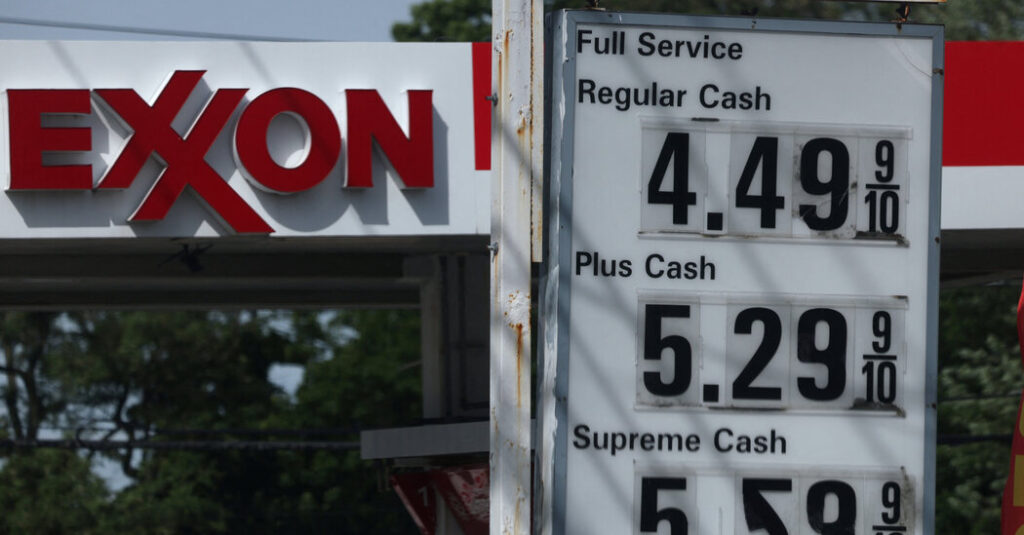
Gas prices fell slightly on Sunday, to a national average of roughly $4.51 a gallon, according to the AAA motor club. The increase has raised the cost for drivers by 51 percent since the war began.
-
Gas prices don’t move in lock step with crude, usually trailing increases or drops by a few days.
-
The average price of diesel also dropped slightly, to $5.62 on Sunday, up about 49 percent since the start of the war.
Jack Ewing covers the auto industry for The Times, with an emphasis on electric vehicles.
The post Oil Prices Fall on News of Possible Iran Deal appeared first on New York Times.