McKinsey candidates can now practice their problem-solving for interviews with AI before they face the real thing.
In April, the global consulting firm launched an AI tool to help candidates prepare for interviews — and, ideally, keep them from feeling they need to pay for pricey consulting coaches.
The tool is available globally to those applying for entry-level positions at the firm — typically business analyst and associate roles, Marie Christine Padberg, McKinsey’s global talent attraction co-leader, told Business Insider.
The AI practice tool gives applicants unlimited attempts at the quantitative case study they’ll face in their interview, a hypothetical business scenario similar to work they might do as McKinsey consultants.
Padberg said the tool helps McKinsey “democratize” preparation by giving everybody the same starting point and access to the full range of preparation at no cost.
The firm receives about one million résumés annually and, in recent years, has given jobs to around 1% of applicants, a spokesperson previously told Business Insider.
McKinsey has long offered candidates preparation materials, including sample cases, video explainers, and guidance from current employees on what to expect.
In recent years, however, a cottage industry tailored to helping competitive young candidates land jobs at firms like McKinsey, Bain, and BCG has also grown alongside the official channels. Courses and preparation support can range from a few hundred dollars to over $2,000.
Padberg said the firm has had issues with services misdirecting candidates, most commonly by overpreparing them.
“We don’t want over-prepared people. We want to really get to the depth of a person’s skills and capabilities through a connection and a conversation, and we don’t want over-rehearsed people,” she said.
The problem-solving case
If offered an interview after initial screening, candidates will receive access to a preparation website, which helps ready them for both the personal interview and the problem-solving interview they face in the next stage.
Before April, they may have had only three or four practice cases. Now they have unlimited chances to drill the case questions and math.
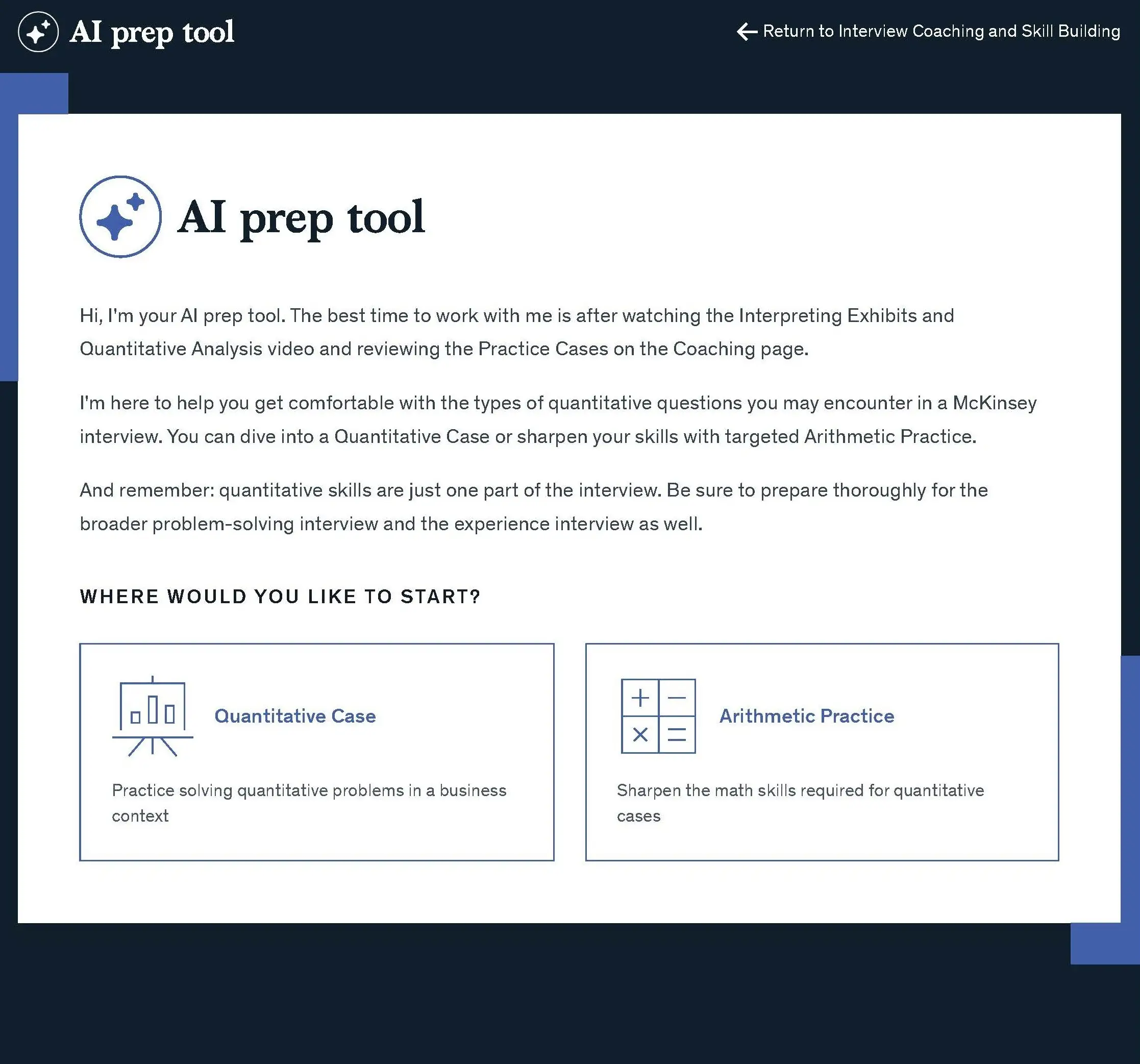
Offering examples across 15 industries, the tool — which appears as a pop-up tab on the website — generates a new case-style question each time candidates use it. It starts with a brief client scenario and the figures needed to answer the question. Candidates can type in their answer, then reveal the correct response and see the calculation steps.
In the first month, 10,000 people have used the AI assistant, said Padberg. McKinsey does not track how candidates use it, nor does it capture how good their answers are, she said.
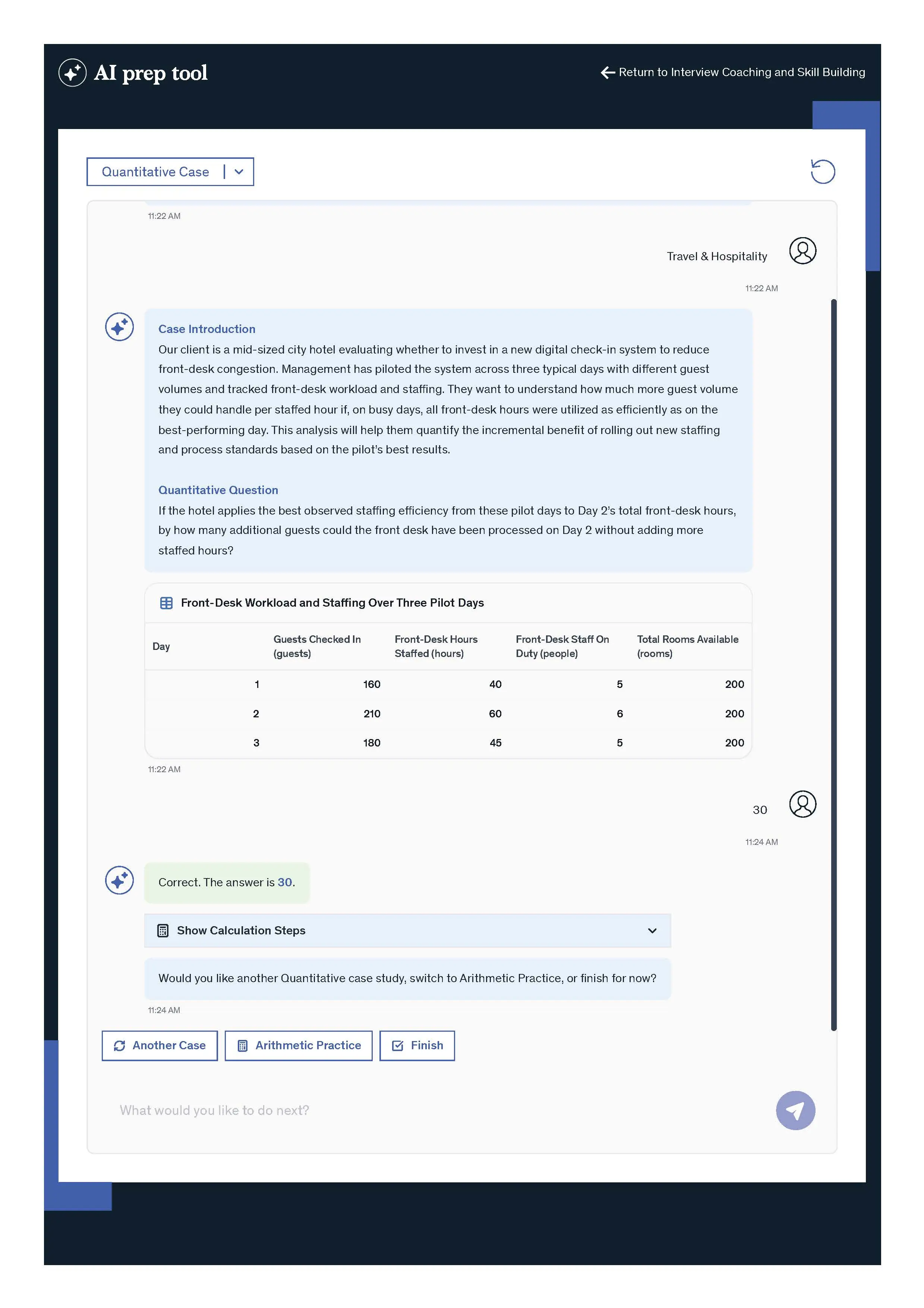
The quantitative component is especially important, she said, because even in an AI-enabled workplace, consultants still need to understand how numbers connect and what they mean.
The tool also addresses a very human part of the interview process: nerves.
“It’s an element that people often get quite nervous about because doing quantitative things is one thing, but doing it while somebody’s watching you is something else,” she said.
Recruiting for the AI future
Across professional services, firms are using AI to automate some of the more tedious work that junior employees once handled, from research to first-draft analysis, while placing greater emphasis on judgment, communication, and the ability to work with AI tools.
KPMG has said it wants junior consultants increasingly managing AI agents rather than doing all the grunt work themselves. Dan Diasio, EY’s global consulting AI leader, recently told Business Insider that AI is making junior consultants more creative, turning them into “creators of new business models, creators of new opportunities for our clients, creators of maybe new products.”
Whatever the outcome, it’s clear that AI is making candidates nervous, said Padberg. Even strong candidates are asking more questions about what AI will mean for entry-level jobs.
McKinsey’s pitch, she said, is increasingly about “career security” rather than job security — the idea that the firm’s training, network, and problem-solving toolkit will remain valuable, even as the labor market changes.
What McKinsey wants, Padberg said, is someone who can do what AI cannot easily replicate: ask better questions, apply judgment, build trust, be curious, and adapt as the work changes.
The firm has also brought AI into other parts of recruiting. Last year, it introduced an interview component that asks candidates to use a publicly available generative-AI tool to work through hypothetical client problems, Padberg said.
McKinsey also uses an AI simulator to train interviewers and has begun piloting an AI interviewer as a first screen for some roles that serve the firm, including visual graphics and technology positions.
Padberg said the goal is to screen more people without being constrained by recruiter capacity, while giving recruiters more time to build relationships with candidates. But, she added, hiring decisions are not something McKisney would outsource to AI.
“At the end of the day, we hire humans; you join a human company,” Padberg said. “We believe the in-person interview is absolutely crucial.”
Read the original article on Business Insider
The post McKinsey wants job candidates to practice interviews with AI, not pricey coaches appeared first on Business Insider.