One key element of the proposed agreement between Iran and the United States is an apparent commitment by Tehran to give up its stockpile of highly enriched uranium, according to two U.S. officials.
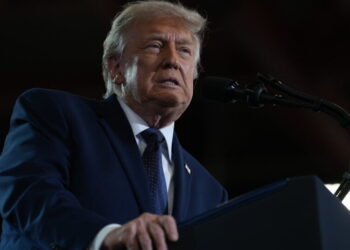
White House officials did not return requests for comment. President Trump said on Saturday that the United States was close to reaching an agreement with Iran toward ending the war and reopening the Strait of Hormuz. But he provided no details, and it was not clear what hurdles might remain to closing a deal.
U.S. officials said that the proposal did not settle the issue of precisely how Iran would give up its stockpile, putting off the details for a coming round of talks on Iran’s nuclear program.
But a general statement that Iran will commit to doing so, a longtime goal of the United States, is critical to the deal — especially if the overall agreement is greeted with skepticism by Republicans on Capitol Hill.
Iran has made no public statements on the agreement that Mr. Trump announced.
Iran originally balked at including in this apparent initial phase any agreement on its stockpile of highly enriched uranium, demanding that it be put off until the second stage of talks. But U.S. negotiators said that they made clear to Iran through intermediaries that without some agreement on the stockpile in the initial part of the deal, they would walk away and resume their military campaign.
Military planners have developed options for Mr. Trump in recent days to bomb Iran’s stockpile, most of which is thought to be at the Isfahan nuclear site. That site was hit by U.S. Tomahawk missiles last June, burying for now the highly enriched uranium.
Among the options discussed was hitting Isfahan with bunker-busting bombs to try to destroy the stockpile underground.
After Iran gained access to the uranium following the strikes last summer, Mr. Trump considered authorizing a U.S.-Israeli commando raid to retrieve the stockpile. The dangerous mission, which could have possibly exposed U.S. and Israeli forces to heavy casualties, was never approved by Mr. Trump.
Iran has a stockpile of about 970 pounds of uranium enriched to 60 percent, according to the International Atomic Energy Agency.
As part of the Obama administration’s 2015 nuclear deal, Iranian officials handed their stockpile over to Russia, something they could do again. They could also seek to convert their stockpile to a level of enrichment that could not be made into a nuclear weapon.
Those nuclear talks, set to begin in the weeks or months to come, will address how to dispose of the stockpile and how to deal with Iran’s enrichment program. The United States had sought a 20-year moratorium on enrichment. Iran had offered a far shorter moratorium.
A key component of any deal would involve the release of billions of dollars in frozen Iranian assets abroad. Iran will only get access to the bulk of those assets that the United States and allies would put into the reconstruction fund once they agree to a final nuclear deal, giving Iran an incentive to stay at the table and make an agreement, the U.S. officials said.
Julian E. Barnes covers the U.S. intelligence agencies and international security matters for The Times. He has written about security issues for more than two decades.
The post Iran Agreed to Give Up Enriched Uranium in Deal Announced by Trump, U.S. Officials Say appeared first on New York Times.