Several months ago, I got the results back from some routine blood tests, and let’s just say several numbers were a tad too high. My doctor advised “continued diet and exercise” and signed off on the results.
For the past couple of years, though, my numbers had been inching up, and I was frustrated that I couldn’t seem to do much about them. I requested a phone call from my doctor — surely, she had better advice than what she wrote — but she messaged back that if I wanted to discuss my results, I had to set up another appointment.
So, I did what everyone does in this day and age: I turned to artificial intelligence. With low expectations, I typed my lab results into ChatGPT.
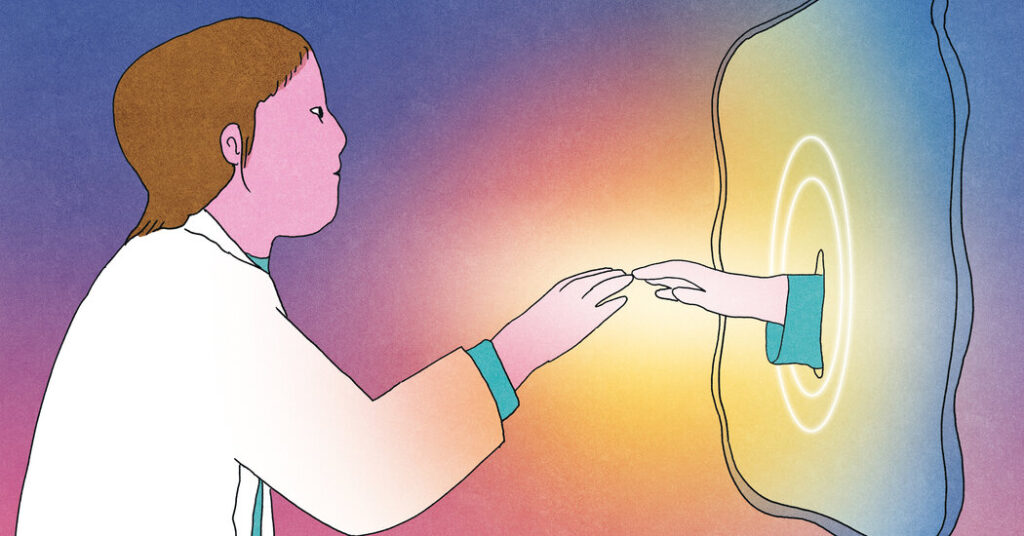
As both a physician and a patient, I found the experience startling. Not because ChatGPT dazzled me with its scientific knowledge, but because it behaved the way I wish modern medicine, and its practitioners, still would.
I had always assumed the “human side” of medicine was the part A.I. couldn’t touch. Sure, I know doctors are turning to A.I. to help them break bad news, since patients seem to find messages crafted by bots more empathetic than those written by doctors. But, in practice, what I thought really mattered was that a person was delivering that care.
The chatbot didn’t just spit back generic advice. It asked questions about my daily life and figured out what I could realistically change. It suggested a short walk immediately after eating, something I’d never taken seriously. When I inquired about doing a longer activity, it told me that would likely offer only marginal benefit. Its recommendations were manageable and easy to follow.
When I sheepishly asked a silly question — if eating my vitamin gummies after my post-meal walks would raise my blood sugar — it asked me to upload the link to the specific product, and it did a close analysis of its ingredients. (No, it would not.)
I felt comfortable telling it that there was no way I was taking some of its suggestions — consuming Metamucil drinks or another psyllium husk powder concoction, no thank you — and it responded with understanding and offered me alternatives. (No offense taken.)
Of course, as I doctor, I know when to question the chatbot and when to ignore it. Many other patients don’t.
But I could also ask the same question over and over, and the chatbot never seemed annoyed or judgmental. Most important, it kept cheering me on — precisely the kind of steady, relational care we keep insisting only humans can provide. Recently, I met a patient living with a highly curable form of cancer. Every week, he would ask a chatbot if his cancer could be cured. He already knew the answer — he just longed for regular reassurance.
As a doctor, I was a little embarrassed to be using ChatGPT. But every interaction with, say, OpenEvidence, a professional medical A.I. tool, felt cold and sterile. It referred to me as if I were a case report, not a person with preferences and habits. I realized what was winning me over about ChatGPT wasn’t its ability to sift through the latest studies, or diagnose my ailments; but its unwavering messages of empathy and encouragement, and its endless willingness to listen and its patience. It’s not human, but it can model some traits we value most in human interaction.
I followed ChatGPT’s advice, and when my blood work improved, ChatGPT affirmed my progress and urged me to keep going. I doubt I would have made those changes — much less stuck with them — without that sustained back-and-forth. I certainly hadn’t before.
It’s a grim fact of American medicine today that doctors can’t come close to a chatbot’s availability. And when the health care system can’t reliably offer time, attentiveness and compassion, patients will go searching for them somewhere else, even from a machine we assumed could never feel human. A.I. may not replace doctors, but it will change what patients expect from us. Doctors need to adapt.
Before I used a chatbot for my own health concerns, the thought of telling a patient to “ask ChatGPT” was inconceivable — or at least something I considered terrible care. Now I’m not so sure. In certain situations, A.I. offers something patients clearly need and medicine has trouble fulfilling.
The reality is, many patients are already consulting A.I. Doctors can keep fearing or condemning those interactions, or they can figure out how to support people using A.I. tools for their health care — cautiously, with clear guardrails. I would never tell patients to ask ChatGPT or Claude for a diagnosis, but perhaps I would suggest they use it to make sense of a new condition or keep up with routine screenings — or translate “diet and exercise” into steps that actually fit into their lives, as I did. At the same time, we need safeguards built into these systems to protect people from real harm from dangerous advice.
My experience with the chatbot has already shifted how I interact with patients in the E.R., with only minutes to piece together fragments of their circumstances. When a patient asks the same question repeatedly, I try to listen for what’s behind it. Maybe she’s not after more medical facts.
Helen Ouyang is a physician, an associate professor at Columbia and a contributing writer for The New York Times Magazine. She is also a fellow at the Type Media Center.
The Times is committed to publishing a diversity of letters to the editor. We’d like to hear what you think about this or any of our articles. Here are some tips. And here’s our email: [email protected].
Follow the New York Times Opinion section on Facebook, Instagram, TikTok, Bluesky, WhatsApp and Threads.
The post Doctors, This Is Why Our Patients Are Using ChatGPT appeared first on New York Times.