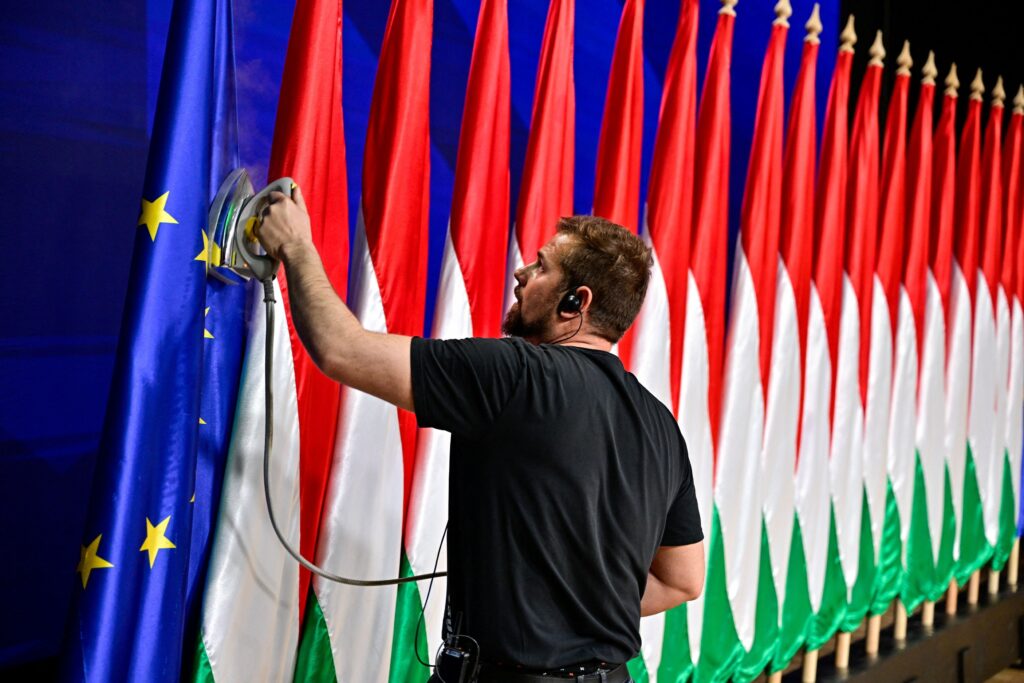
Hungarian Prime Minister Viktor Orban spent his 16 years in power cultivating Western conservatives, and he became a hero of the right with outsize influence for the leader of a country so small. But this wasn’t enough to overcome disdain at home for his apparent corruption and economic mismanagement, and voters showed this week that democracy is alive and well in Central Europe.
Orban decisively lost the vote to Peter Magyar amid record turnout on Sunday. Magyar’s Tisza party now has a supermajority in parliament and the mandate to push through big reforms. On top of getting the economy going, the greatest challenge will be removing illiberal influence from the country’s institutions without using Orban’s illiberal methods.
Democratic norms have eroded dramatically in Hungary. Press freedoms were under attack, the rule of law was compromised and Orban’s Fidesz party had tilted the playing field with extreme gerrymandering.
Yet the main reason for Orban’s fall was endemic corruption. He built what the Hungarian sociologist Bálint Magyar called a “mafia state” that funneled European Union funds to regime loyalists. Transparency International has ranked Hungary as the most corrupt country in the E.U. four years running.
As Orban’s son-in-law and childhood friend grew wealthy, Hungary’s economy grew by only 0.4 percent last year. Hungary ranked last in the E.U. for household wealth. It has a doctor shortage and the E.U.’s worst cancer mortality rate — predictable outcomes when public money flows to cronies instead of hospitals.
Some American conservatives were attracted to Orban’s social conservatism and family policy. By one measure, the government was allocating 5 percent of gross domestic product toward support for families, but the country still has a below-replacement birthrate.
Magyar ran against the rot rather than particular policies. The young conservative lawyer was a longtime Fidesz insider who held senior posts in state institutions before breaking with the party in 2024. He promised not a return to liberal values but a restoration of clean government, functioning public services and opportunity for everyone.
Notably, Magyar vowed to keep Orban’s border fence and strongly opposed E.U. migrant quotas, stayed quiet on LGBTQ+ rights and said almost nothing about Ukraine. His anti-corruption message was designed to reach deep into Fidesz’s rural base.
Magyar’s anti-graft campaign inevitably made him anti-Kremlin, as well. Orban has been friendly to Russia for years and made opposition to Ukraine central to his campaign.
Magyar is almost certain to play nice with Brussels for now. The European Commission is currently withholding around $25 billion — 10 percent of the country’s output — over democratic backsliding. Expect Hungary’s veto over aid to Ukraine to be lifted.
Supportive notes from President Donald Trump and a campaign rally with Vice President JD Vance proved ineffective. Just as Americans don’t want to be told who to vote for by foreigners, neither do Hungarians.
The post The lessons of Viktor Orban’s defeat appeared first on Washington Post.