President Trump announced on Friday that he would impose a new, across-the-board 10 percent tariff on U.S. trading partners, part of a series of steps meant to preserve his trade war now that the Supreme Court has declared many of his most punishing duties illegal.
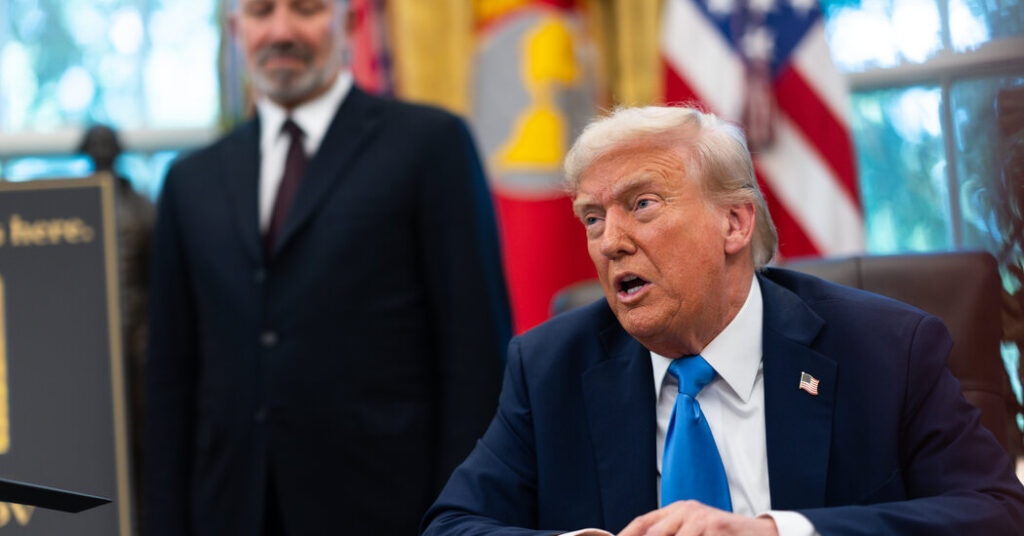
Striking a defiant note even in legal defeat, Mr. Trump asserted at a news conference that he remained unbowed and would take advantage of other federal laws in a bid to duplicate the steep taxes on imports that the justices have invalidated.
For one thing, Mr. Trump said he would invoke a portion of law known as Section 122, which no president has ever used, to impose a 10 percent global tariff starting in a matter of days. Separately, the president said he would use a second set of authorities, called Section 301, to open investigations into certain, unspecified countries’ unfair trade practices.
Together, Mr. Trump tried to frame the actions as a close substitute for his emergency tariffs, which he enacted under the International Emergency Economic Powers Act, known as IEEPA. He used that law because he believed it afforded him flexibility to impose and lift steep duties, instantly and without Congress, in ways that pressured other countries into accepting U.S. demands.
To that end, the two sets of authorities that Mr. Trump said he would invoke on Friday carry much different, and clearer, limits on their use.
The forthcoming, 10 percent tariff may be in place for only 150 days, unless lawmakers approve an extension. It is legally untested, but the law affords the power for the president to address issues including a widening trade deficit.
The investigations into unfair trade practices may also take time, perhaps delaying the administration’s efforts to reimpose steep import taxes. It is more legally settled, and the president has used it since his first term, particularly to impose duties on China.
Tyler Pager is a White House correspondent for The Times, covering President Trump and his administration.
The post Trump Plans to Impose Tariffs a Different Way After Supreme Court Loss appeared first on New York Times.