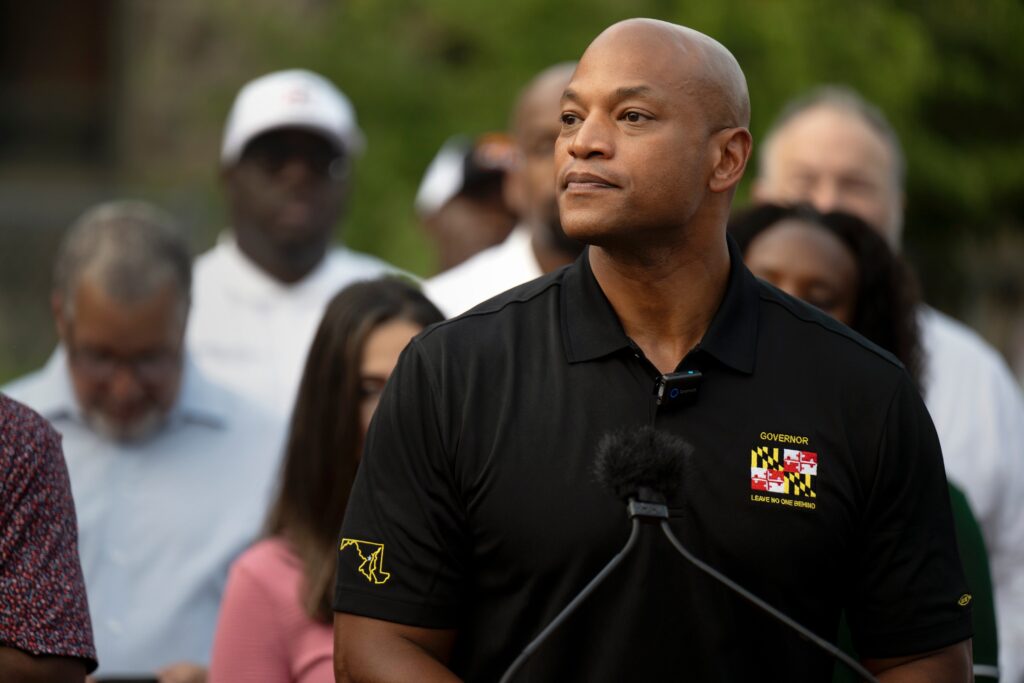
Maryland Gov. Wes Moore (D) will call legislators back to Annapolis for a special session on Dec. 16 to appoint a new speaker of the House, but the General Assembly will not take up a redistricting debate that has divided Democratic Party leaders in the state, according to several people with knowledge of the plan.
The House of Delegates must appoint a new speaker after Del. Adrienne A. Jones (D-Baltimore County) unexpectedly stepped down from the position last week. Jones, who made history as the first Black person and woman to serve as speaker, will continue in her role as a state delegate and has filed for reelection next year.
Del. Joseline A. Peña-Melnyk (D-Prince George’s), who chairs the House and Government Operations Committee, has emerged as the front-runner to fill the speaker’s seat. The House Democratic caucus will meet on Dec. 16 to select a new speaker, and the General Assembly will likely convene to formally vote the same day, according to several people who spoke on the condition of anonymity because the plan had not yet been announced.
Lawmakers will also vote on whether to override several of Moore’s vetoes of legislation that passed both chambers earlier this year, which could reanimate a controversial billto set up a study on reparations that Moore vetoed this spring.
The legislature will not, however, be voting on a proposal pushed by Moore to redraw the state’s congressional districts to create a new map with an 8-0 advantage for Democrats. The current map includes a sole Republican-leaning congressional district, represented by Rep. Andy Harris (R-Maryland), a close ally of President Donald Trump’s who chairs the House Freedom Caucus.
Moore joined a chorus of Democrats nationwide calling for blue states to create new electoral maps before the midterm elections next year to counter a Republican effort spurred by Trump to secure more seats for the GOP in 2026.
“We’re not going to allow the Trump administration to rig the rules so they can try to win an election,” Moore told reporters in October.
Trump this summer called on states like Texas and Missouri to refashion their congressional maps to favor Republicans in more U.S. House races. Democrats in California, led by Gov. Gavin Newsom (D), struck back with their own plans to produce maps that favor their party.
The political gerrymandering arms race has spread to other states, including Virginia and Illinois, even as Texas’s map was challenged in the courts. The Supreme Court last week cleared a path for Texas to adopt its new, GOP-friendly map.
Moore, with the backing of national Democrats including House Minority Leader Hakeem Jeffries (New York) and former vice president Kamala Harris, has urged Maryland to join the blue states fighting back against Trump’s mission to win more Republican seats in the U.S. House.
The effort would aim to make Maryland’s lone Republican congressional district more competitive, potentially unseating Rep. Andy Harris.
But Moore faced swift push back from Senate President Bill Ferguson (D-Baltimore City), who argued that redistricting poses a risk to Maryland’s electoral map because of past court challenges. Opening up the map to further scrutiny could even lead Democrats to lose a House seat, Ferguson said.
As senate president, Ferguson had the power to block redistricting from coming up at a special session despite the governor’s aggressive push to do so. Even in the face of an intense pressure campaign from Democrats nationally and in Maryland, Ferguson has steadfastly maintained his opposition, which he says is shared by a number of state senators.
After Ferguson made it clear he would not be moved, Moore reactivated a redistricting commission made up of four Democrats and one Republican to seek public input on mid-cycle redistricting and make a recommendation for how the state should proceed. That commission has been meeting weekly to listen to Maryland residents weigh in on the idea, but has not yet voted on how to move forward.
Though redistricting will not come up during the brief special session slated for next week, the issue may resurface during the regular legislative session that begins Jan. 14, at least in the House of Delegates. Both Ferguson and the new House speaker will hold significant power over how that debate unfolds.
The post Md. governor to call special legislative session, but not for redistricting appeared first on Washington Post.